Les Misérables was first a novel by Victor Hugo, then adapted into a play in 1985. In 2012, there was a movie based on the musical adaptation of the book. The musical follows Jean Valjean, an ex-convict who tries to rebuild his life after prison. He is relentlessly pursued by the strict Inspector Javert, who believes justice must be absolute. In the chaos of Javert’s pursuit of Valjean, Valjean adopts and raises Cosette.
While Paris is shaken by political unrest, culminating in a failed student uprising. Where Cosette meets Marius, a member of a student revolutionary group, and they fall in love. Valjean finds out about this, rescues Marius, saving him from the front lines, and faces Javert in a final showdown.
The story explores themes of justice, mercy, love, and redemption as Valjean ultimately finds peace. While Javert confronts the consequences of their beliefs, ultimately, not being able to face the change in their beliefs commits suicide.
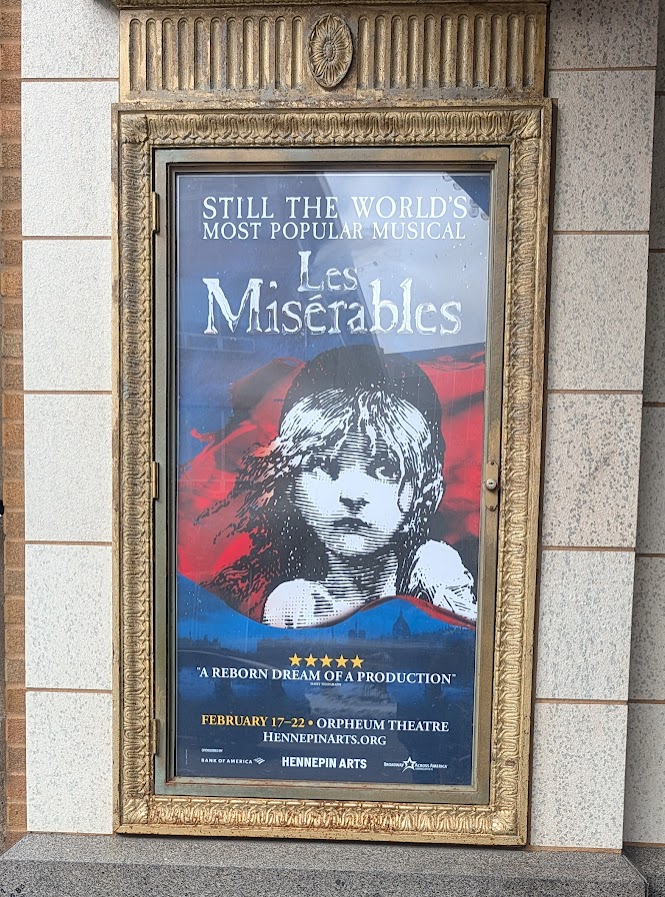
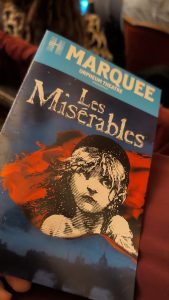
On February 22, I went to the closing night of Les Misérables at the Orpheum Theater in Minneapolis. Given the subject matter of the play, I found the irony not lost on me that they would be in town, only blocks away from the ICE agents’ hotels.
You could see many parallels throughout the story, but unlike the student revolutionary group in the fictional story, based on the 1832 June Rebellion. We have technology on our side and a community that came together to support us.
In Les Misérables, when the boys woke up after the first night, they were lost and deflated that they had no support, that the word had not gotten out, and they knew then they would all be killed. These days are different. When Renee Good and Alex Pretti were killed, we, the residents of Minneapolis, rallied together and joined the fight.
In the Twin Cities, we heard the people singing, the songs of angry men. We joined marches, we provided mutual aid, and fundraised where we could. We as a community did something that the student revolutionaries wished they could have accomplished in their time.
Even though ICE has reduced its physical presence in Minneapolis, it is still seen in cities, and whistles are still heard in the streets. The barricades are still up around the Whipple building, and we still see people being released late at night to the community. Where we are waiting for them with blankets and food. Minnesota still remains strong and united.
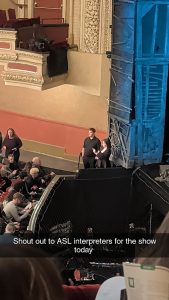
Overall, it was a beautiful performance, and it was nice to see, for the first time, how they provide ADA accommodations for ASL interpreters, as I had not had a chance to experience that as an audience
member before, and I actually enjoyed seeing them. In the past, I had performed in theater and had only ever experienced ASL accommodation at meet-and-greets. I never really knew where they would stand half the time, or that they had their very own backdrop and spotlight that blended in with the scene on stage. It was nice seeing it from an audience perspective. As always, the Orpheum Theater is known for making accommodations, and always check out the website in advance to see how to notify them of any special requests.